Sundar Pichai and Carl Icahn: Careers, Leadership, Wealth, and Business Influence

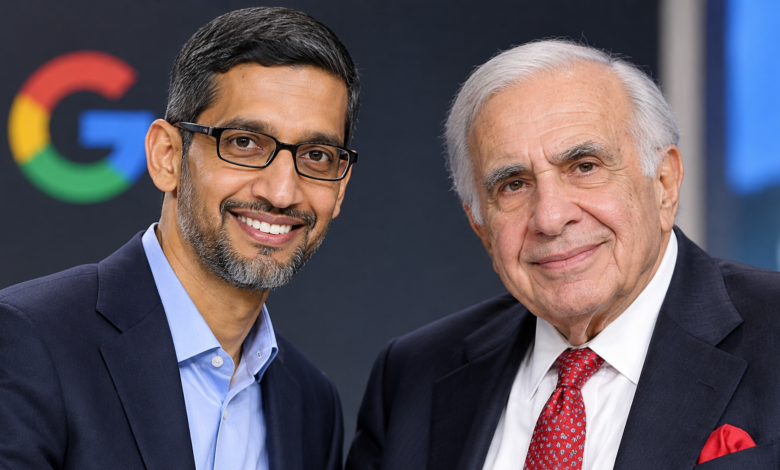
Sundar Pichai and Carl Icahn are two influential business figures who have made their names in very different areas of the corporate world. Sundar Pichai is the chief executive officer of Google and its parent company, Alphabet, and is known for leading one of the world’s most important technology businesses. Carl Icahn, meanwhile, is a famous American investor and corporate activist who built his reputation by investing in companies, influencing management decisions, and pushing businesses to improve shareholder value.
The keyword Sundar Pichai and Carl Icahn brings together two individuals whose careers offer interesting lessons about leadership, investment, innovation, and business strategy. Pichai’s professional journey demonstrates how technical knowledge and thoughtful management can lead to the top of a global technology company. Icahn’s career shows how financial expertise, negotiation, and an understanding of corporate structures can influence some of the world’s largest businesses.
Although both men are associated with major corporations and financial success, they have different professional responsibilities and business philosophies. There is no widely established public evidence of a significant personal relationship or direct business partnership between them. Understanding their individual careers provides a more accurate picture of their achievements and influence.
Who Is Sundar Pichai?
Sundar Pichai and Carl Icahn Pichai, whose full name is Pichai Sundararajan, is an Indian-American business executive who leads Google and Alphabet. He was born on June 10, 1972, in Madurai, Tamil Nadu, India, and grew up in Chennai. His journey from an ordinary childhood in India to becoming the leader of one of the world’s most valuable technology companies is an inspiring example of education, determination, and professional growth.
Pichai developed an interest in technology and engineering at an early age. He studied metallurgical engineering at the Indian Institute of Technology Kharagpur, where he earned his bachelor’s degree. Later, he moved to the United States to continue his education, receiving a master’s degree in materials science and engineering from Stanford University. He also completed an MBA at the Wharton School of the University of Pennsylvania, where he received recognition as a Siebel Scholar and Palmer Scholar.
Before joining Google, Pichai worked at Applied Materials and McKinsey & Company. These experiences helped him develop technical knowledge and business management skills. In 2004, he joined Google, beginning a professional journey that eventually led him to become CEO of Google in 2015 and CEO of Alphabet in 2019. His educational and professional background is documented by the Business Roundtable biography and the American Academy of Arts and Sciences.
Sundar Pichai’s Journey at Google
Sundar Pichai joined Google in 2004, when the company was growing rapidly and developing products that would change how people used the internet. One of his early responsibilities involved Google Toolbar, a product that made it easier for people to search the web through their browsers. His ability to understand consumer needs and contribute to product development helped him gain recognition within the organization.
One of his most important career achievements was his involvement in the development and growth of Google Chrome. The browser launched in 2008 and eventually became one of the most widely used web browsers in the world. Chrome helped strengthen Google’s position in the internet industry and demonstrated Pichai’s ability to support products that could reach millions of users. He later took on leadership responsibilities involving Android, Chrome, and other major Google services.
In 2014, Pichai became responsible for product and engineering across a much wider range of Google’s products and platforms. His responsibilities included Search, Maps, Android, Gmail, Google Play, and other important services. In August 2015, he became Google’s CEO. Four years later, he also took responsibility for Alphabet, Google’s parent company. His rise demonstrates how technical expertise, product understanding, and effective management can create opportunities for leadership at the highest corporate level.
Sundar Pichai’s Leadership Style and Achievements
Pichai is generally recognized for a calm and thoughtful leadership style. Leading a global technology company requires making decisions that affect employees, customers, developers, advertisers, and business partners across different countries. His approach has involved encouraging innovation while maintaining Google’s position in important technology markets.
One of the biggest areas of focus during his leadership has been artificial intelligence. Google has invested heavily in AI research, products, and infrastructure, including its Gemini models and AI-powered features across Search and Workspace. The company has also continued developing Google Cloud, YouTube, Android, and other services. These investments reflect the growing importance of AI in the technology industry.
Another important part of Pichai’s leadership has been managing Google during periods of competition and regulatory scrutiny. Technology companies face challenges involving privacy, advertising practices, market competition, and responsible use of artificial intelligence. As CEO, he must balance business growth with public expectations and legal responsibilities. His career shows that managing a technology company requires more than developing successful products; it also involves maintaining trust and responding to complex global challenges.
Who Is Carl Icahn?
Carl Icahn is an American billionaire investor and corporate activist who became famous for his aggressive investment strategies and influence over major corporations. He is widely recognized as one of the most prominent activist investors in American business history. Unlike traditional investors who mainly purchase shares and wait for companies to grow, Icahn has often taken significant positions in businesses and pushed management teams to make changes that he believes can increase shareholder value.
Icahn was born on February 16, 1936, in Queens, New York. He attended Princeton University, where he graduated with a degree in philosophy in 1957. He later attended medical school at New York University but did not complete his medical studies. Instead, he entered the financial world and began building his career on Wall Street in 1961.
In 1968, Icahn established Icahn & Co., a securities firm that initially focused on arbitrage and options trading. Over time, he became known for purchasing significant stakes in companies and using his influence to challenge management decisions, corporate strategies, and business structures. His career eventually made him a recognizable figure in American finance. His background and professional history are described on his official website and in the Harvard Business School business leader profile.
Carl Icahn’s Career and Rise in Wall Street
Carl Icahn’s rise in the financial industry was built on identifying investment opportunities that other market participants sometimes overlooked. During his early years on Wall Street, he developed expertise in options trading, arbitrage, and complex financial transactions. These activities helped him understand how businesses were valued and how changes in corporate structures could create opportunities for investors.
As his career developed, Icahn became increasingly involved in corporate activism. He purchased substantial shares in companies and sometimes challenged their existing leadership. His approach could involve requesting management changes, restructuring operations, selling certain business divisions, or considering transactions that might increase shareholder value. This strategy earned him a reputation as a powerful and sometimes controversial investor.
Over the decades, Icahn became involved with several well-known companies, including Texaco, TWA, RJR Nabisco, Time Warner, Motorola, Netflix, Apple, and eBay. His investment activities covered industries such as technology, telecommunications, energy, transportation, and consumer products. His career illustrates how a determined investor can influence corporate decision-making when holding a sufficiently large financial position.
Carl Icahn’s Investment Philosophy and Business Strategy
Carl Icahn’s investment philosophy is closely associated with activist investing. This approach involves purchasing shares in companies that an investor believes are undervalued or could perform better with changes to their management or business strategy. Instead of remaining a passive shareholder, an activist investor may communicate directly with company executives and board members to encourage changes.
One important part of Icahn’s strategy has been identifying businesses where he believes management decisions are preventing the company from reaching its full potential. He has frequently argued that companies should focus on improving efficiency, using capital wisely, and making decisions that benefit shareholders. His willingness to challenge corporate leadership has made him an influential figure in discussions about corporate governance.
However, activist investing also comes with risks and disagreements. Company executives may oppose an investor’s proposals, and changes that appear financially attractive in the short term may not always produce the best long-term results. Icahn’s career demonstrates the power of shareholder influence, but it also highlights the importance of carefully evaluating the consequences of corporate restructuring and financial decisions.
Sundar Pichai and Carl Icahn: What Do They Have in Common?
Although Sundar Pichai and Carl Icahn work in different areas of business, their careers share several interesting similarities. Both have become internationally recognized figures through their involvement with major corporations. Pichai leads Google and Alphabet, while Icahn has influenced numerous companies through his investment activities and corporate campaigns.
Another similarity is their understanding of business value. Pichai focuses on developing technology products and services that attract users, support advertising, and create new revenue opportunities. Icahn approaches business value from an investor’s perspective, examining whether companies are using their resources effectively and whether their market valuations reflect their potential. Their methods are different, but both involve evaluating how businesses can create sustainable financial value.
Both individuals also demonstrate the importance of making difficult decisions. Pichai must guide a global technology organization through rapid innovation, competition, and regulatory challenges. Icahn has built his reputation by challenging established corporate practices and demanding changes when he believes companies are underperforming. Their careers show that business leadership and influence can take different forms depending on a person’s responsibilities and professional goals.
Differences Between Sundar Pichai and Carl Icahn
The most significant difference between Sundar Pichai and Carl Icahn is their professional role. Pichai is an executive responsible for overseeing the operations, products, technology strategy, and long-term direction of Google and Alphabet. His responsibilities involve managing employees, developing products, investing in infrastructure, and maintaining relationships with customers and business partners.
Icahn, on the other hand, is primarily known as an investor and corporate activist. His influence comes from acquiring ownership positions in businesses and using shareholder rights to advocate for changes. Rather than managing Google’s daily operations or developing technology products, his career has focused on evaluating companies and identifying investment opportunities.
Their educational backgrounds and career paths are also different. Pichai studied engineering and business administration before developing his career in technology management. Icahn studied philosophy at Princeton before entering the financial industry. These contrasting journeys demonstrate that there is no single educational route to business success. Technical knowledge, financial understanding, communication skills, and strategic thinking can all contribute to professional achievements.
Their Influence on the Global Business World
Sundar Pichai and Carl Icahn Sundar Pichai’s influence can be seen in the way people around the world use technology. Google Search, Chrome, Android, Gmail, Google Maps, and YouTube have become part of everyday life for millions of individuals and businesses. Under his leadership, Google has also invested in AI technologies that may significantly influence how people access information, communicate, and complete work.
Carl Icahn’s influence is more closely connected to financial markets and corporate governance. His investment campaigns have brought attention to issues such as executive accountability, shareholder rights, business restructuring, and the efficient use of company resources. His activities have helped make activist investing an important subject in corporate finance.
Their influence also demonstrates how different parts of the business world are connected. Technology companies need capital, investors, employees, and customers to grow. Financial markets depend on businesses developing products and services that create economic value. Although Pichai and Icahn approach the corporate world from different positions, both have contributed to conversations about how large organizations should operate and develop.
Carl Icahn’s Philanthropy and Social Contributions
Beyond his investment career, Carl Icahn has supported several educational, medical, and community organizations. His philanthropic activities demonstrate that his public life extends beyond financial markets and corporate transactions. He has contributed resources to institutions that support medical research, education, and social welfare.
One of his most significant contributions was a $200 million gift to Mount Sinai School of Medicine in 2012. Following this donation, the institution was renamed the Icahn School of Medicine at Mount Sinai. His support has helped strengthen medical education and research, including work involving genomics and other areas of healthcare science.
Icahn has also supported educational initiatives through Icahn Charter Schools in the Bronx and contributions to Princeton University and other institutions. His charitable activities include support for programs serving disadvantaged communities and homeless families. These contributions are an important part of his broader public legacy.
Lessons Entrepreneurs Can Learn From Sundar Pichai and Carl Icahn
One important lesson from Sundar Pichai and Carl Icahn Pichai’s career is the value of continuous learning. His background in engineering and business helped him understand both the technical and commercial sides of the technology industry. Entrepreneurs can apply this lesson by developing skills in different areas instead of relying on only one type of knowledge.
Carl Icahn’s career offers another lesson: understanding a business’s financial position is essential. Entrepreneurs and investors should examine how companies use their resources, manage expenses, and create value for shareholders and customers. A business may have a recognizable name, but its long-term success depends on sound financial decisions and effective management.
Both careers also highlight the importance of adapting to change. Technology companies must respond to new innovations and changing consumer expectations, while investors must adjust their strategies as market conditions evolve. Businesses that remain flexible, pay attention to customers, and make informed decisions are often better positioned to handle uncertainty.
Finally, their professional journeys demonstrate the importance of patience and persistence. Pichai spent years developing his expertise before becoming Google’s CEO, while Icahn built his financial career through decades of investment experience. Their achievements show that meaningful professional success generally requires consistent effort, practical knowledge, and the ability to learn from challenges.
Frequently Asked Questions About Sundar Pichai and Carl Icahn
1. Who is Sundar Pichai?
Sundar Pichai and Carl Icahn Pichai is an Indian-American business executive who serves as the CEO of Google and Alphabet. He joined Google in 2004 and became Google’s CEO in 2015. He is known for his role in developing and managing major products, including Chrome, Android, Search, and Gmail.
2. Who is Carl Icahn?
Carl Icahn is an American billionaire investor and corporate activist. He founded Icahn & Co. in 1968 and became famous for purchasing significant stakes in companies and encouraging corporate changes to improve shareholder value.
3. Are Sundar Pichai and Carl Icahn related?
There is no widely documented public evidence establishing a family relationship between Sundar Pichai and Carl Icahn. They come from different professional backgrounds and have built their reputations in separate areas of business.
4. Have Sundar Pichai and Carl Icahn worked together?
There is no widely established public evidence of a significant direct business partnership between the two. Pichai’s career focuses on technology leadership at Google and Alphabet, while Icahn is known for investment management and corporate activism.
5. What is Sundar Pichai famous for?
Sundar Pichai and Carl Icahn Pichai is famous for becoming the CEO of Google and Alphabet. He also played an important role in the development and growth of Google Chrome and has overseen the company’s expansion into artificial intelligence and other technologies.
6. What is Carl Icahn famous for?
Carl Icahn is famous for activist investing and influencing major corporate decisions. His investment activities have involved companies across technology, energy, transportation, telecommunications, and other industries.
Conclusion
Sundar Pichai and Carl Icahn are two influential business personalities whose careers demonstrate different ways of achieving success in the corporate world. Pichai built his reputation through engineering, product development, and technology leadership, eventually becoming the CEO of Google and Alphabet. Carl Icahn established himself as a major Wall Street investor through corporate activism, strategic investments, and his ability to influence company decisions.
Although their professional paths are different, both individuals demonstrate the importance of strategic thinking, business knowledge, and the ability to recognize opportunities. Pichai’s achievements highlight the power of technology and innovation, while Icahn’s career demonstrates the influence that investors can have on corporate management and financial performance.
For readers searching for Sundar Pichai and Carl Icahn, the most important point is that their stories are connected through their influence on the wider business world, not through a confirmed personal relationship or joint venture. Studying their individual achievements provides valuable lessons about leadership, investment, innovation, and long-term professional growth.
You May Also Read: Richard Branson and Bill Gates