Introduction
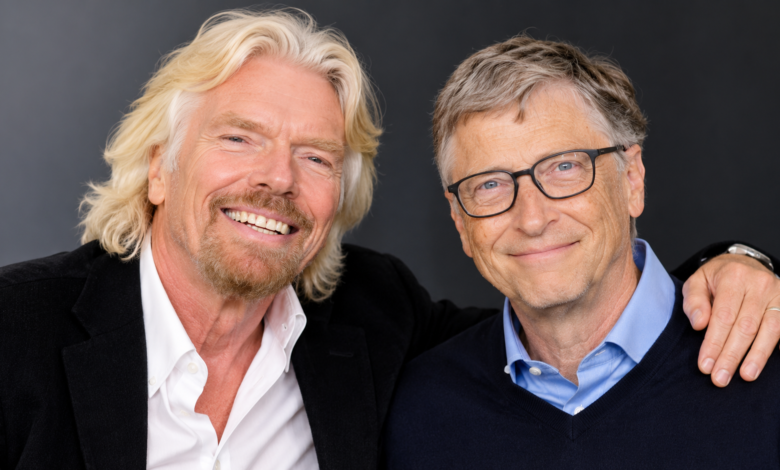
Richard Branson and Bill Gates are two of the most recognized entrepreneurs in the world. Both built successful businesses, became internationally influential figures, and used their wealth and public platforms to support different causes. However, their journeys to success were very different. Richard Branson became famous for building the Virgin Group, a business empire that expanded into music, airlines, travel, telecommunications, and space tourism. Bill Gates, meanwhile, became one of the most influential figures in the technology industry as the co-founder of Microsoft.
The keyword Richard Branson and Bill Gates attracts interest because both men represent different approaches to entrepreneurship, innovation, and wealth creation. Branson is widely associated with taking business risks, creating memorable brands, and challenging established industries. Gates is known for his technical knowledge, strategic thinking, and role in making personal computing accessible to millions of people. Their careers provide valuable lessons for anyone interested in business, leadership, and long-term success.
Although their professional backgrounds are different, Richard Branson and Bill Gates share several qualities. Both recognized opportunities that other people overlooked, built companies around products and services with broad appeal, and developed international reputations. They also became involved in philanthropy, using their influence and resources to address important global challenges. Understanding their individual stories helps explain why they remain two of the most discussed business personalities of the modern era.
Who Is Richard Branson?
Sir Richard Branson and Bill Gates Branson is a British entrepreneur and the founder of the Virgin Group. Born on July 18, 1950, in Surrey, England, he became interested in business at a young age. His first major entrepreneurial project was a student magazine called Student, which he started as a teenager. Although his early business activities were not always financially successful, they helped him develop confidence, communication skills, and an understanding of how to attract customers.
In 1970, Branson started a mail-order record business under the Virgin name. The business eventually expanded into retail stores and Virgin Records, which became an important independent record label. The company signed well-known artists and helped establish Branson’s reputation in the entertainment industry. Its early success provided the foundation for the wider Virgin brand, which later entered several unrelated business sectors.
Branson’s approach to entrepreneurship was based on identifying customer dissatisfaction and offering an alternative. He often looked for industries where customers believed existing services could be better. This thinking helped Virgin expand into airlines, telecommunications, hospitality, and other markets. Today, Richard Branson and Bill Gates Branson is recognized not only as a businessman but also as an author, adventurer, and philanthropist. His official biography describes the development of Virgin from a small record retailer into an international group of companies.
Richard Branson’s Journey With Virgin Group
The Virgin Group began with music and retail, but Richard Branson and Bill Gates Branson had ambitions that extended far beyond the entertainment industry. After establishing Virgin Records, he explored opportunities in other sectors where a recognizable brand and a different customer experience could create a competitive advantage. This willingness to enter unfamiliar markets became one of the defining features of his business career.
One of the most important expansions came in 1984, when Branson founded Virgin Atlantic. The airline entered a highly competitive market dominated by established carriers. Virgin Atlantic attempted to differentiate itself through customer service, entertainment, and a distinctive brand personality. Building an airline required significant financial resources and operational expertise, but it demonstrated Branson’s willingness to take calculated risks.
Over the years, the Virgin name appeared in businesses involving travel, telecommunications, entertainment, hotels, and leisure. Not every Virgin venture achieved lasting success, but the group’s expansion showed how a strong brand could create opportunities across different markets. Branson’s career also demonstrates that entrepreneurship involves experimentation. Some ideas become successful businesses, while others provide lessons that influence future decisions.
Richard Branson’s Leadership Style and Business Philosophy
Richard Branson and Bill Gates Branson is known for a leadership style that emphasizes creativity, customer experience, employee engagement, and taking calculated risks. He has often spoken about the importance of creating workplaces where employees feel valued and motivated. His philosophy suggests that businesses are more likely to serve customers effectively when the people working inside them receive support and respect.
Another important feature of Branson’s approach is his willingness to challenge traditional business practices. Instead of assuming that established companies always understand their customers, he has looked for areas where existing services could be improved. This mindset helped Virgin develop a reputation for offering alternatives in competitive industries.
Branson also believes that businesses should consider their wider impact on society and the environment. Through Virgin Unite, established in 2004, he has supported initiatives focused on social and environmental challenges. His career illustrates how entrepreneurship can extend beyond financial performance and include efforts to create positive change.
Who Is Bill Gates?
Bill Gates is an American entrepreneur, technology pioneer, investor, and philanthropist best known as the co-founder of Microsoft. Born on October 28, 1955, in Seattle, Washington, Gates developed an interest in computers at an early age. His curiosity about programming helped him recognize the potential of software when personal computing was still developing.
Gates attended Harvard University but left before completing his degree to focus on building a technology company with his childhood friend Paul Allen. In 1975, the two co-founded Microsoft, a company that would eventually become one of the world’s most influential software businesses. Their goal was to develop software for the growing personal computer market, which was beginning to create opportunities for businesses and individual users.
Microsoft became particularly successful through products such as the Windows operating system and Microsoft Office. These products helped make computers useful for everyday tasks, including writing documents, managing information, preparing presentations, and running businesses. Gates became one of the most recognized figures in technology because of his role in shaping the personal computing industry.
Richard Branson and Bill Gates: Business Success, Wealth, and Life Stories
Introduction
Richard Branson and Bill Gates are two of the most recognized entrepreneurs in the world. Both built successful businesses, became internationally influential figures, and used their wealth and public platforms to support different causes. However, their journeys to success were very different. Richard Branson and Bill Gates Branson became famous for building the Virgin Group, a business empire that expanded into music, airlines, travel, telecommunications, and space tourism. Bill Gates, meanwhile, became one of the most influential figures in the technology industry as the co-founder of Microsoft.
The keyword Richard Branson and Bill Gates attracts interest because both men represent different approaches to entrepreneurship, innovation, and wealth creation. Branson is widely associated with taking business risks, creating memorable brands, and challenging established industries. Gates is known for his technical knowledge, strategic thinking, and role in making personal computing accessible to millions of people. Their careers provide valuable lessons for anyone interested in business, leadership, and long-term success.
Although their professional backgrounds are different, Richard Branson and Bill Gates share several qualities. Both recognized opportunities that other people overlooked, built companies around products and services with broad appeal, and developed international reputations. They also became involved in philanthropy, using their influence and resources to address important global challenges. Understanding their individual stories helps explain why they remain two of the most discussed business personalities of the modern era.
Who Is Richard Branson?
Sir Richard Branson and Bill Gates Branson is a British entrepreneur and the founder of the Virgin Group. Born on July 18, 1950, in Surrey, England, he became interested in business at a young age. His first major entrepreneurial project was a student magazine called Student, which he started as a teenager. Although his early business activities were not always financially successful, they helped him develop confidence, communication skills, and an understanding of how to attract customers.
In 1970, Branson started a mail-order record business under the Virgin name. The business eventually expanded into retail stores and Virgin Records, which became an important independent record label. The company signed well-known artists and helped establish Branson’s reputation in the entertainment industry. Its early success provided the foundation for the wider Virgin brand, which later entered several unrelated business sectors.
Branson’s approach to entrepreneurship was based on identifying customer dissatisfaction and offering an alternative. He often looked for industries where customers believed existing services could be better. This thinking helped Virgin expand into airlines, telecommunications, hospitality, and other markets. Today, Richard Branson and Bill Gates Branson is recognized not only as a businessman but also as an author, adventurer, and philanthropist. His official biography describes the development of Virgin from a small record retailer into an international group of companies.
Richard Branson’s Journey With Virgin Group
The Virgin Group began with music and retail, but Richard Branson and Bill Gates Branson had ambitions that extended far beyond the entertainment industry. After establishing Virgin Records, he explored opportunities in other sectors where a recognizable brand and a different customer experience could create a competitive advantage. This willingness to enter unfamiliar markets became one of the defining features of his business career.
One of the most important expansions came in 1984, when Branson founded Virgin Atlantic. The airline entered a highly competitive market dominated by established carriers. Virgin Atlantic attempted to differentiate itself through customer service, entertainment, and a distinctive brand personality. Building an airline required significant financial resources and operational expertise, but it demonstrated Branson’s willingness to take calculated risks.
Over the years, the Virgin name appeared in businesses involving travel, telecommunications, entertainment, hotels, and leisure. Not every Virgin venture achieved lasting success, but the group’s expansion showed how a strong brand could create opportunities across different markets. Branson’s career also demonstrates that entrepreneurship involves experimentation. Some ideas become successful businesses, while others provide lessons that influence future decisions.
Richard Branson’s Leadership Style and Business Philosophy
Richard Branson and Bill Gates Branson is known for a leadership style that emphasizes creativity, customer experience, employee engagement, and taking calculated risks. He has often spoken about the importance of creating workplaces where employees feel valued and motivated. His philosophy suggests that businesses are more likely to serve customers effectively when the people working inside them receive support and respect.
Another important feature of Branson’s approach is his willingness to challenge traditional business practices. Instead of assuming that established companies always understand their customers, he has looked for areas where existing services could be improved. This mindset helped Virgin develop a reputation for offering alternatives in competitive industries.
Branson also believes that businesses should consider their wider impact on society and the environment. Through Virgin Unite, established in 2004, he has supported initiatives focused on social and environmental challenges. His career illustrates how entrepreneurship can extend beyond financial performance and include efforts to create positive change. <Cite refs={[“turn734393search1″,”turn734393search2”]}/>
Who Is Bill Gates?
Bill Gates is an American entrepreneur, technology pioneer, investor, and philanthropist best known as the co-founder of Microsoft. Born on October 28, 1955, in Seattle, Washington, Gates developed an interest in computers at an early age. His curiosity about programming helped him recognize the potential of software when personal computing was still developing.
Gates attended Harvard University but left before completing his degree to focus on building a technology company with his childhood friend Paul Allen. In 1975, the two co-founded Microsoft, a company that would eventually become one of the world’s most influential software businesses. Their goal was to develop software for the growing personal computer market, which was beginning to create opportunities for businesses and individual users.
Microsoft became particularly successful through products such as the Windows operating system and Microsoft Office. These products helped make computers useful for everyday tasks, including writing documents, managing information, preparing presentations, and running businesses. Gates became one of the most recognized figures in technology because of his role in shaping the personal computing industry
Bill Gates and the Growth of Microsoft
Microsoft’s growth changed the technology industry and influenced how people use computers in everyday life. During the early years of personal computing, software was becoming increasingly important, but the market was still developing. Gates and Allen recognized that software could become a major business opportunity as computers became more common in homes, schools, and offices.
One of Microsoft’s biggest achievements was the development and expansion of Windows. The operating system made personal computers easier to use and helped establish a familiar computing environment for millions of people. Microsoft Office also became an important part of the company’s success, offering tools such as Word, Excel, and PowerPoint that became widely used in professional and educational settings.
Gates served as Microsoft’s chief executive officer for many years before gradually moving away from day-to-day management. In 2008, he transitioned to focus full-time on the Bill & Melinda Gates Foundation. Although he stepped back from Microsoft’s daily operations, his influence on the technology industry remained significant. His career demonstrates how a strong understanding of technology, combined with business strategy, can transform an emerging market into a major global industry.
Bill Gates’ Leadership Style and Business Philosophy
Bill Gates became known for his analytical thinking, attention to technical details, and competitive approach to business. During Microsoft’s early development, he focused heavily on software quality, product development, and building relationships with computer manufacturers. His ability to understand both the technical and commercial sides of the industry helped Microsoft establish a strong position in the software market.
Another important part of his leadership philosophy was the belief that technology could improve productivity. Microsoft products helped individuals and organizations complete tasks more efficiently. Gates understood that software was not simply an additional feature of computers; it was becoming an essential part of how businesses operated and how people accessed information.
Gates has also emphasized the importance of learning, research, and innovation. His interests expanded beyond software into global health, education, climate change, and scientific development. Through his work in philanthropy and technology investment, he has continued supporting ideas that may help solve complex problems. His career shows how business knowledge can be applied to challenges outside the commercial world.
Richard Branson and Bill Gates: What Do They Have in Common?
Richard Branson and Bill Gates may have entered different industries, but their careers share several important characteristics. Both recognized business opportunities during periods of major change and developed companies that eventually reached international markets. Branson identified opportunities in music, travel, and customer-focused services, while Gates recognized the growing importance of computer software.
Both entrepreneurs also understood the importance of building strong brands. Virgin became associated with a distinctive personality, customer experience, and willingness to challenge traditional industries. Microsoft became recognized for software products that helped businesses and individuals use computers more effectively. Their brands developed different identities, but both benefited from consistent product recognition and international expansion.
Another similarity is their interest in philanthropy. Branson established Virgin Unite to support social and environmental initiatives, while Gates helped establish the Gates Foundation to address global health, poverty, education, and development challenges. Both demonstrate how successful entrepreneurs can use their influence and resources to support causes beyond their original businesses.
Richard Branson vs. Bill Gates: Key Differences
The biggest difference between Richard Branson and Bill Gates is the nature of their entrepreneurial journeys. Branson built businesses across several industries, including music, airlines, travel, and telecommunications. His strategy frequently involved entering competitive markets and attempting to provide customers with a different experience.
Gates concentrated much of his early business career on technology, particularly software development. Rather than creating a broad collection of unrelated consumer businesses, he helped build Microsoft around products that became essential to personal and professional computing. His technical background played a major role in the company’s development.
Their personalities and public images are also different. Branson is widely recognized for his adventurous lifestyle, public challenges, and relaxed communication style. Gates is generally associated with analytical thinking, technology, research, and philanthropy. Despite these differences, both have demonstrated that successful entrepreneurship requires vision, persistence, and an ability to respond to changing markets.
Richard Branson and Bill Gates’ Philanthropic Work
Philanthropy has become an important part of both men’s public identities. Richard Branson and Bill Gates Branson established Virgin Unite in 2004 as a nonprofit organization connected to the Virgin Group. The organization works with entrepreneurs, business leaders, and other partners to address social and environmental challenges. Its activities reflect Branson’s belief that business can contribute to positive social change.
Bill Gates has devoted considerable time and resources to global development through the Gates Foundation. Its work includes supporting vaccination programs, improving healthcare systems, addressing infectious diseases, strengthening agricultural development, and expanding educational opportunities. The foundation works with governments, researchers, charities, and other organizations to support long-term solutions.
In 2010, Bill Gates, Melinda French Gates, and Warren Buffett helped establish the Giving Pledge, encouraging wealthy individuals and families to commit most of their wealth to charitable causes. Gates has also announced plans to give away virtually all of his remaining wealth over time, with the foundation scheduled to close at the end of 2045. These commitments demonstrate how philanthropy has become a central part of his long-term plans.
What Entrepreneurs Can Learn From Richard Branson and Bill Gates
One of the biggest lessons from Richard Branson and Bill Gates Branson’s career is that entrepreneurs should not be afraid to explore new opportunities. His expansion from a small record business into multiple industries shows how curiosity and a willingness to experiment can create opportunities. However, entering a new market requires research, planning, and a clear understanding of customer needs.
Bill Gates’ career teaches the importance of developing expertise and recognizing the potential of emerging technology. Microsoft became successful because its founders understood that software would become increasingly valuable as computers entered everyday life. Entrepreneurs can apply this lesson by paying attention to technological changes and identifying problems that new products or services could solve.
Both careers also highlight the importance of persistence. Neither entrepreneur achieved success without facing challenges, competition, and difficult decisions. Branson experienced unsuccessful ventures, while Microsoft operated in a highly competitive technology environment. Their journeys show that mistakes and setbacks can provide useful lessons when people are willing to learn and improve.
Frequently Asked Questions About Richard Branson and Bill Gates
1. Who is Richard Branson?
Richard Branson and Bill Gates Branson is a British entrepreneur and the founder of Virgin Group. He established Virgin as a mail-order record business in 1970 and later expanded it into music, airlines, travel, telecommunications, and other industries. He is also known for his philanthropic activities and adventurous lifestyle.
2. Who is Bill Gates?
Bill Gates is an American entrepreneur and the co-founder of Microsoft. He helped develop the company into a global technology leader through software products such as Windows and Microsoft Office. He is also known for his extensive philanthropic work through the Gates Foundation.
3. Are Richard Branson and Bill Gates friends?
Both are internationally recognized business personalities who have participated in global business and philanthropic discussions. However, their professional biographies do not establish a specific close personal friendship. It is more accurate to describe them as influential entrepreneurs whose careers share several similarities.
4. Who is richer, Richard Branson or Bill Gates?
Their estimated net worths change over time because of investments, business valuations, charitable donations, and market conditions. Bill Gates has generally ranked considerably higher in major published wealth rankings. For accurate current figures, readers should consult updated financial rankings rather than rely on outdated estimates.
5. What businesses are Richard Branson and Bill Gates known for?
Richard Branson and Bill Gates Branson is best known for Virgin Group, which operates across several industries, including travel and entertainment. Bill Gates is best known for Microsoft, the technology company he co-founded with Paul Allen in 1975.
6. What do Richard Branson and Bill Gates have in common?
Both are successful entrepreneurs who built internationally recognized businesses. They have also supported philanthropic initiatives and demonstrated an interest in using business, innovation, and investment to address wider social challenges.
Conclusion
Richard Branson and Bill Gates are two remarkable entrepreneurs whose careers have influenced different parts of the modern business world. Branson built the Virgin brand through creativity, customer-focused services, and expansion into multiple industries. Gates helped transform personal computing through Microsoft and later became deeply involved in global philanthropy, healthcare, and technological innovation.
Although their business strategies and personalities are different, both men demonstrate the importance of recognizing opportunities, developing useful products, and adapting to changing markets. Branson’s journey highlights the value of taking calculated risks and creating memorable customer experiences, while Gates’ career demonstrates the power of technical knowledge, strategic planning, and innovation.
For anyone researching Richard Branson and Bill Gates, their stories offer valuable lessons about entrepreneurship, leadership, wealth creation, and philanthropy. Their achievements show that there is no single path to success. With a clear vision, consistent effort, and the willingness to learn, entrepreneurs can build businesses that influence industries and create opportunities for future generations.
You May Also Read; Michael Jackson and Travis Kalanick