Richard Liu and Germán Larrea: Exploring the Business Empires of Two Billionaires

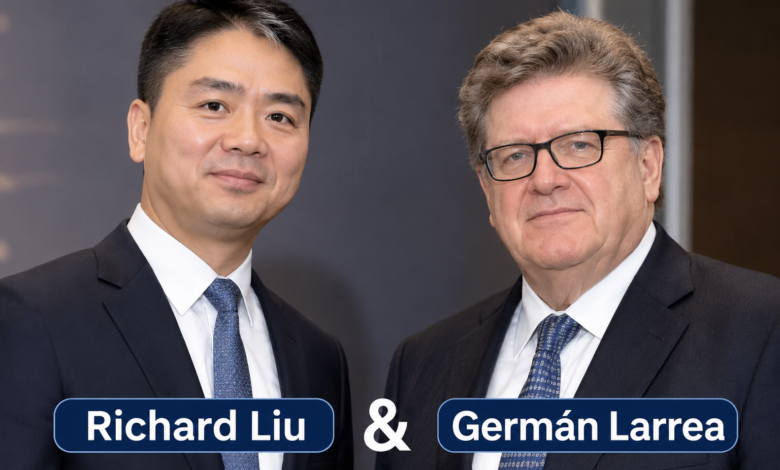
Richard Liu and Germán Larrea The worlds of technology, e-commerce, mining, and international business are shaped by entrepreneurs who understand how to turn opportunities into powerful companies. Richard Liu and Germán Larrea are two prominent business figures who have built substantial influence in very different industries. While Richard Liu is widely recognized for founding JD.com, one of China’s largest e-commerce companies, Germán Larrea is known for leading Grupo México, a major mining and infrastructure business with operations across several countries.
Their professional journeys offer an interesting comparison of two different approaches to wealth creation. Liu built his business around technology, online shopping, logistics, and customer service, while Larrea developed his influence through mining, natural resources, transportation, and industrial investments. Despite working in different sectors, both demonstrate how long-term business strategies, investment decisions, and leadership can shape large corporate organizations.
This article explores Richard Liu and Germán Larrea, including their backgrounds, business achievements, leadership styles, sources of wealth, and influence on the global economy.
Who Is Richard Liu?
Richard Liu and Germán Larrea Liu, whose Chinese name is Liu Qiangdong, is a Chinese entrepreneur best known as the founder and chairman of JD.com. Born on March 10, 1973, he developed an interest in business and technology before becoming one of the most recognizable figures in China’s digital retail industry. His journey is particularly interesting because he did not begin with a large company or unlimited financial resources. Instead, he started with a small retail operation and gradually expanded his business ambitions.
Liu studied sociology at Renmin University of China, where he developed an understanding of society, consumer behavior, and organizational structures. Although his academic background was not directly focused on technology, he eventually applied his knowledge to building a business that connected millions of customers with products through digital platforms. His education and early experiences helped shape his approach to customer relationships and business development.
One of the defining characteristics of Richard Liu and Germán Larrea Liu’s career has been his willingness to adapt to changing market conditions. Rather than remaining limited to traditional retail, he recognized the growing potential of internet-based shopping. This decision became a turning point in his professional life and helped establish the foundation for JD.com’s future expansion. Today, he is associated with a major business organization that operates across retail, logistics, healthcare, and technology.
How Richard Liu Built JD.com
Richard Liu and Germán Larrea Liu began his entrepreneurial journey in 1998 by opening a small electronics retail business in Beijing. The store focused on selling electronic products and accessories. At the time, traditional retail was an important part of China’s consumer market, but the internet was beginning to create new opportunities. Liu understood that online commerce could eventually offer customers greater convenience and access to a wider selection of products.
In 2004, he moved his retail business online, creating the foundation of what became JD.com. This transition was a major decision because it required a different operating model. Instead of relying entirely on physical stores, the company needed a reliable digital platform, product sourcing, delivery services, and customer support. Liu focused on building these elements together rather than treating online shopping as a simple website-based business.
JD.com gradually expanded beyond electronics into categories such as clothing, household products, groceries, beauty products, and everyday essentials. The company also invested heavily in logistics and warehouse infrastructure. Its delivery network became an important competitive advantage because customers increasingly expected authentic products, dependable service, and faster deliveries. This strategy helped JD.com establish a strong position in China’s competitive e-commerce industry.
JD.Com, Inc.+1
Richard Liu’s Leadership Style and Business Strategy
Richard Liu and Germán Larrea Liu’s leadership approach has often emphasized operational efficiency, customer satisfaction, and long-term investment. Unlike businesses that depend heavily on third-party sellers and external delivery providers, JD.com developed substantial control over important parts of its retail and distribution operations. This approach allowed the company to build a recognizable service model and maintain greater oversight of product handling and delivery.
Another important part of Liu’s strategy has been diversification. JD.com gradually developed businesses beyond its original online shopping platform. JD Logistics became a significant part of the company’s operations, while JD Health expanded into digital healthcare services. JD Technology also became part of the wider business structure. These investments helped the organization develop additional sources of revenue and reduce its dependence on a single commercial activity.
Liu stepped down as JD.com’s chief executive in April 2022 but continued as chairman. This transition represented a change in his formal responsibilities, allowing the company’s professional management team to handle everyday operations. His continued association with JD.com demonstrates the importance of founder involvement in long-term corporate strategy, although the company’s daily management is the responsibility of its executive leadership.
Who Is Germán Larrea?
Germán Larrea Mota-Velasco is a Mexican businessman widely recognized for his leadership in the mining and industrial sectors. He is particularly associated with Grupo México, a major conglomerate with business interests in mining, railway transportation, and infrastructure. Unlike Richard Liu and Germán Larrea Liu, whose career developed around digital commerce, Larrea built his influence in industries connected to natural resources and large-scale physical operations.
Larrea comes from a business-oriented background and developed his career within the Mexican corporate environment. He became involved with Grupo México early in his professional life and gradually took on important leadership responsibilities. His experience in industrial management helped him understand the financial, operational, and logistical challenges associated with running large companies.
Over the years, Larrea has become one of Mexico’s most influential business figures. His relatively private public profile contrasts with the considerable scale of the companies connected to his leadership. His business interests extend beyond copper production and include transportation networks, infrastructure projects, and entertainment investments. This broad portfolio has made him an important figure in discussions about Mexico’s corporate economy.
How Germán Larrea Built His Business Empire
The development of Grupo México has played a central role in Germán Larrea’s business journey. He became chairman of the company in 1994, a position that placed him at the center of its long-term corporate strategy. Under his leadership, the conglomerate continued developing its mining operations and expanding its presence in other industrial sectors.
Mining is the foundation of Grupo México’s business activities. Copper is especially important because it is used in electrical wiring, construction, industrial equipment, renewable energy systems, and modern infrastructure. As demand for electricity and advanced technologies has grown, copper has remained an essential material for several industries. Grupo México’s mining operations have therefore given the company an important position in international commodity markets.
The company also expanded its interests in railway transportation and infrastructure. Its transportation businesses help move industrial goods and connect important commercial locations. These operations complement its mining activities because large-scale mineral production depends on reliable transportation systems. By developing businesses across connected industries, Larrea helped create a diversified industrial organization with several important sources of commercial activity.
Germán Larrea’s Leadership and Investment Strategy
One of the most notable aspects of Germán Larrea’s leadership is his focus on large-scale industrial investments. Mining operations require substantial financial resources, specialized equipment, technical knowledge, and long-term planning. These businesses cannot be developed overnight, so successful management depends on understanding market cycles, production costs, infrastructure requirements, and international demand.
Larrea’s business strategy also involves maintaining interests in multiple sectors. Grupo México’s mining, transportation, and infrastructure divisions provide different opportunities for business development. The company’s railway operations, for example, are important for transporting industrial products and supporting commercial activity. Its infrastructure investments also help broaden the group’s business activities beyond the extraction of natural resources.
Another interesting part of Larrea’s approach is his relatively low public profile. He is not known for maintaining the same highly visible public presence as many technology entrepreneurs. Instead, his reputation is largely connected to the companies he leads and their role in Mexico’s industrial economy. This demonstrates that business influence can be developed through corporate ownership, strategic investments, and long-term industrial leadership rather than personal publicity.
Richard Liu and Germán Larrea: Comparing Their Business Empires
Although Richard Liu and Germán Larrea operate in different industries, their business journeys share several interesting similarities. Both entrepreneurs understood the importance of building businesses that could operate on a large scale. Liu focused on digital commerce and technology, while Larrea concentrated on industrial operations and natural resources. Their achievements demonstrate that there are multiple ways to build a successful business empire.
One major difference between them is the nature of their industries. Richard Liu and Germán Larrea Liu operates in a fast-changing digital environment where consumer preferences, technology, competition, and online shopping trends can change quickly. Germán Larrea works in industries where projects often require significant capital investment and long development periods. Mining companies must consider equipment costs, environmental regulations, commodity prices, and transportation infrastructure.
Their leadership responsibilities also reflect these differences. Liu helped create a technology-driven organization that relies on digital platforms, customer data, and sophisticated logistics systems. Larrea’s business leadership involves managing industrial assets, mining operations, transportation networks, and infrastructure investments. Despite these differences, both have demonstrated the importance of strategic planning and organizational development.
Richard Liu and Germán Larrea: Net Worth and Sources of Wealth
Richard Liu and Germán Larrea have accumulated substantial wealth through their involvement in major businesses. However, their financial positions come from different sources. Richard Liu and Germán Larrea Liu’s wealth is primarily connected to his ownership interest in JD.com and his association with the company’s wider business operations. Since JD.com is a publicly traded company, changes in its share price can influence the estimated value of his personal fortune.
Germán Larrea’s wealth is closely associated with his business interests in Grupo México and its industrial subsidiaries. Mining is particularly important because copper prices can influence company revenues, profitability, and investor expectations. The performance of transportation and infrastructure businesses can also affect the overall value of the conglomerate and Larrea’s business holdings.
It is important to understand that billionaire wealth estimates are not the same as cash held in personal bank accounts. Most of the wealth of major business owners is connected to company shares, investments, and other assets. These valuations can change considerably depending on financial markets and economic conditions. Therefore, exact comparisons between Richard Liu and Germán Larrea should always use dated and reliable financial estimates rather than treating net worth figures as permanent facts.
Business Challenges and Controversies
Building a large business organization also brings considerable challenges. Richard Liu and JD.com operate in China’s highly competitive e-commerce market, where companies must continuously improve prices, delivery services, technology, and customer experiences. Competition from other major platforms creates pressure to maintain market share while controlling operational expenses. Changes in consumer spending and government regulations can also influence the company’s performance.
JD.com has also faced public scrutiny surrounding its founder. Liu was involved in a widely reported sexual assault allegation in the United States in 2018, which he denied. Prosecutors later declined to pursue criminal charges. The incident attracted international attention and became part of the public discussion surrounding his business career. It is important to distinguish allegations, legal outcomes, and verified business information when discussing public figures.
Germán Larrea and Grupo México face a different set of challenges. Mining operations can attract environmental concerns, regulatory scrutiny, labor disputes, and questions about workplace safety. The company’s activities also depend on international commodity markets, which can experience significant price fluctuations. Managing these challenges requires investment in responsible operations, regulatory compliance, and long-term relationships with communities and employees.
Their Influence on the Global Economy
Richard Liu and Germán Larrea Liu’s influence extends beyond online shopping in China. JD.com has helped develop the country’s e-commerce infrastructure by connecting manufacturers, sellers, warehouses, delivery networks, and consumers. Its logistics investments have also contributed to the development of modern supply chain systems. As online retail continues to grow, the company’s experience provides an example of how technology and operational investment can transform traditional commerce.
Germán Larrea’s business activities are important to Mexico’s industrial economy and the wider international mining market. Copper is essential for electrical infrastructure, transportation systems, construction, and renewable energy technologies. Grupo México’s mining and transportation operations therefore contribute to industries that support economic development in multiple countries.
Their influence also highlights the importance of international business connections. Digital retail companies depend on manufacturers, technology providers, and logistics partners, while mining conglomerates depend on international buyers, transportation systems, and industrial customers. Both business models demonstrate how companies operating in one country can become connected to global markets.
Lessons Entrepreneurs Can Learn From Richard Liu and Germán Larrea
The careers of Richard Liu and Germán Larrea provide several useful lessons for aspiring entrepreneurs. One important lesson is the value of identifying opportunities before a market becomes fully developed. Liu recognized the potential of online retail when traditional shopping was still dominant, while Larrea developed his position in industries that support essential economic activities. Understanding market demand can help business owners identify opportunities for sustainable growth.
Another lesson is the importance of long-term investment. Building JD.com required substantial attention to technology, warehousing, and delivery infrastructure. Similarly, developing a major mining and transportation business requires investment in equipment, facilities, technical expertise, and operational systems. Successful businesses often need more than a good idea; they need the resources and patience to turn that idea into a functioning organization.
Diversification is another important takeaway. Liu’s business ecosystem expanded into logistics, healthcare, and technology, while Larrea’s business interests include mining, transportation, infrastructure, and entertainment. Expanding into related industries can create additional opportunities, although diversification also introduces new risks. Entrepreneurs should understand their financial capabilities and market conditions before entering unfamiliar sectors.
The Future of Their Business Legacies
The future of Richard Liu and Germán Larrea Liu’s business legacy will remain closely connected to JD.com’s ability to compete in an evolving digital economy. Artificial intelligence, automated warehouses, faster delivery systems, and changing shopping habits are likely to influence the future of online retail. JD.com will need to continue improving its services while maintaining financial discipline and customer trust. Liu’s role as founder and chairman makes his long-term business vision an important part of the company’s history.
For Germán Larrea, the future of his business interests will depend partly on developments in global mining and infrastructure. Demand for copper is connected to electricity networks, electric vehicles, renewable energy, and industrial expansion. However, commodity prices, environmental standards, and regulatory requirements will continue to influence the performance of mining companies. Grupo México’s ability to adapt to these changes will be important for its future development.
Both entrepreneurs have established business legacies that extend beyond their original industries. Their companies operate in sectors that influence everyday life, from online shopping and product delivery to electricity infrastructure and transportation. Their future influence will depend not only on financial performance but also on how effectively their businesses respond to technological, economic, and environmental changes.
Conclusion
Richard Liu and Germán Larrea represent two different models of entrepreneurial success. Liu built his reputation through JD.com, transforming a small electronics retail operation into a major e-commerce and technology business. Larrea developed his influence through Grupo México, expanding its position in mining, railway transportation, and infrastructure. Their professional journeys show how business leaders can create substantial economic influence by recognizing opportunities and developing long-term strategies.
Although their industries are very different, both entrepreneurs demonstrate the importance of investment, leadership, operational efficiency, and business diversification.Richard Liu and Germán Larrea Liu’s career highlights the growing importance of digital commerce and logistics, while Germán Larrea’s business journey demonstrates the continuing importance of natural resources and industrial infrastructure.
Ultimately, Richard Liu and Germán Larrea are interesting examples of how different business strategies can lead to significant commercial success. Their stories offer valuable insights into entrepreneurship, corporate leadership, and the changing global economy.
You May Also Read: Kobe Bryant and Sam Zell