Long Tail Keywords: The Complete Guide to Boosting SEO and Driving Targeted Traffic

Introduction to Long Tail Keywords
If you’ve spent any time learning about search engine optimization (SEO), you’ve probably heard the term long tail keywords. While many beginners focus on short, high-volume keywords, experienced marketers know that long tail keywords often deliver better rankings, more targeted visitors, and higher conversion rates. They may not generate millions of searches every month, but they attract people who know exactly what they’re looking for.
The internet has become more competitive than ever. Thousands of websites compete for the same broad search terms every single day. Ranking for a keyword like “shoes” or “marketing” is extremely difficult because massive brands dominate those results. This is where long tail keywords become incredibly valuable. Instead of targeting broad topics, they allow you to focus on specific user searches that have less competition and stronger buying intent.
Whether you own a blog, an eCommerce store, or a business website, understanding long tail keywords can dramatically improve your SEO strategy. This guide explains everything you need to know, from what they are to how you can find and use them effectively to increase your website traffic and conversions.
What Are Long Tail Keywords?
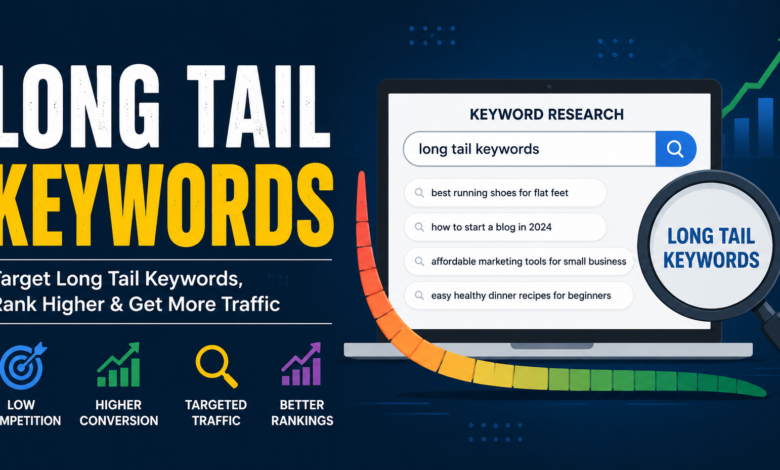
Long tail keywords are longer and more specific search phrases that people type into search engines when they have a clear goal. Instead of using one or two words, these keywords usually contain three, four, or even more words that narrow down the search intent.
For example, instead of searching for “laptop,” someone may search for “best gaming laptop under $1000 for students.” The second search is much more detailed, making it easier for search engines to understand exactly what the user wants. This is a perfect example of how long tail keywords work.
Although each individual long tail keyword typically has a lower monthly search volume, they collectively account for the majority of searches performed online. Search behavior continues to become more conversational, especially with voice search and AI-powered assistants, making long tail keywords even more valuable than they were just a few years ago.
Why Long Tail Keywords Matter for SEO
One of the biggest reasons SEO professionals prioritize long tail keywords is because they are easier to rank for. Highly competitive short keywords are usually dominated by established websites with strong authority, while long tail phrases often have much lower competition.
Another advantage is that long tail keywords attract highly targeted visitors. People searching with detailed phrases usually know what they want. This means they are more likely to stay on your website, read your content, subscribe to your newsletter, or complete a purchase.
Long tail keywords also improve overall content quality. Since they focus on answering specific questions, they encourage you to create detailed, helpful articles that provide genuine value. Search engines reward this type of content because it satisfies user intent more effectively.
Long Tail Keywords vs Short Tail Keywords
Short tail keywords usually contain one or two words and attract massive search volumes. Examples include “insurance,” “fitness,” or “coffee.” While these terms can generate significant traffic, they are incredibly competitive and often have unclear search intent.
On the other hand, long tail keywords are much more descriptive. Someone searching “best organic coffee beans for espresso machines” has a much clearer purpose than someone simply searching “coffee.” Because the search intent is specific, businesses have a better chance of converting these visitors into customers.
Another major difference is conversion rate. Short keywords often attract casual browsers, while long tail keywords usually bring users who are closer to making a decision. This makes them especially valuable for affiliate marketers, bloggers, and online stores looking to maximize return on investment.
Benefits of Using Long Tail Keywords
One major benefit of using long tail keywords is lower competition. Since fewer websites target highly specific phrases, new websites have a realistic opportunity to rank on Google’s first page without waiting years to build authority.
Long tail keywords also produce higher conversion rates. Visitors arriving through detailed searches typically have stronger purchase intent or a clear informational need. As a result, they’re more likely to complete desired actions, including making purchases, signing up for newsletters, or requesting services.
Another benefit is content diversity. Instead of writing generic articles that compete with thousands of similar pages, you can create multiple focused pieces targeting different search intents. Over time, these articles collectively generate substantial organic traffic while establishing topical authority in your niche.
How to Find Long Tail Keywords
Finding effective long tail keywords starts with understanding your audience. Think about the exact questions they ask, the problems they face, and the language they naturally use when searching online.
Google itself offers several excellent keyword discovery opportunities. The autocomplete suggestions that appear while typing into the search bar are based on real user searches. Likewise, the “People Also Ask” section and related searches at the bottom of search results provide valuable keyword inspiration.
Professional keyword research tools such as Ahrefs, SEMrush, Ubersuggest, Moz, and Google Keyword Planner can also help identify long tail keywords with useful metrics like search volume, keyword difficulty, and estimated traffic potential. Combining multiple sources often leads to the best results.
How to Use Long Tail Keywords Naturally
Adding long tail keywords to your content should always feel natural. Search engines have become sophisticated enough to recognize keyword stuffing, which can actually hurt your rankings rather than improve them.
Include your primary long tail keyword in important locations such as the title, introduction, one or two headings, meta description, URL, and naturally throughout the article. At the same time, use related terms and synonyms to help search engines better understand the overall topic.
The key is writing for people first and search engines second. High-quality content that genuinely answers user questions will almost always outperform content that simply repeats the same keyword over and over.
Common Mistakes to Avoid
One common mistake is focusing only on search volume. Many beginners ignore long tail keywords because they appear to have fewer monthly searches. However, smaller search volume often comes with lower competition and significantly better conversion potential.
Another mistake is targeting too many unrelated keywords within a single article. Instead of trying to rank for dozens of topics at once, focus each page around one primary long tail keyword supported by closely related secondary phrases.
Ignoring search intent is another costly error. Before creating content, examine the current search results. If users are looking for product comparisons, don’t publish a general informational article. Matching search intent is one of the most important ranking factors in modern SEO.
Long Tail Keywords and Voice Search
Voice search continues to grow as more people use smartphones, smart speakers, and AI assistants. Unlike traditional searches, voice queries are naturally longer and more conversational, making long tail keywords increasingly important.
People rarely say just “weather.” Instead, they ask, “What’s the weather going to be like this weekend in New York?” These conversational searches closely resemble the long tail keywords that modern SEO strategies prioritize.
Creating content that answers complete questions improves your chances of appearing in featured snippets, voice search results, and AI-generated search experiences. This makes long tail keyword optimization a future-proof SEO strategy.
Best Practices for Long Tail Keyword Success
Begin every content project with thorough keyword research. Identify your primary long tail keyword before writing and build your article around answering that specific search query better than competing pages.
Create comprehensive, well-structured content that includes useful headings, examples, statistics, and actionable advice. Readers appreciate detailed information, and search engines reward pages that provide complete answers.
Keep updating your articles regularly. Search trends change over time, and refreshing your content helps maintain rankings while allowing you to include newly discovered long tail keywords that become relevant to your audience.
Conclusion
Mastering long tail keywords is one of the smartest investments you can make in your SEO strategy. Instead of competing against massive websites for broad search terms, you can attract highly targeted visitors by focusing on the specific phrases your audience actually searches for. These keywords help improve rankings, increase organic traffic, strengthen topical authority, and generate better conversion rates.
As search engines continue evolving and user behavior becomes increasingly conversational, the importance of long tail keywords will only continue to grow. Whether you’re building a personal blog, growing an affiliate website, or expanding an online business, incorporating well-researched long tail keywords into your content strategy will position your website for long-term SEO success. Focus on creating valuable, helpful content around relevant long tail keywords, and you’ll build sustainable organic traffic that continues to grow over time.
You May Also Read: SEO Quiz