Introduction
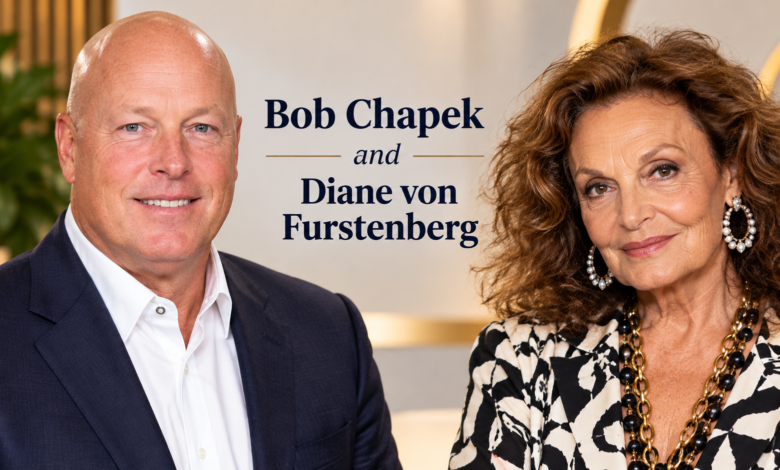
Bob Chapek and Diane von Furstenberg are two well-known names associated with different areas of the business world. Bob Chapek built his career in media, entertainment, and corporate management, eventually becoming the chief executive officer of The Walt Disney Company. Diane von Furstenberg, meanwhile, became an internationally recognized fashion designer and entrepreneur, best known for creating the iconic wrap dress and building a fashion brand that carries her name. Although their professional paths are different, both offer interesting examples of leadership, ambition, and long-term brand development.
The keyword Bob Chapek and Diane von Furstenberg brings together two personalities whose careers demonstrate how business leaders can influence popular culture in different ways. Chapek’s work focused on entertainment operations, consumer products, and theme park experiences, while von Furstenberg built a reputation through fashion, creativity, and the empowerment of women. Their stories provide useful insights into the challenges of maintaining a recognizable brand in a competitive global market.
It is important, however, to distinguish their individual achievements from any personal or professional connection between them. There is no widely established public evidence that they share a significant personal relationship or a specific joint business venture. Their relevance as a topic lies primarily in their separate contributions to business and culture, rather than in a confirmed partnership.
Who Is Bob Chapek?
Bob Chapek, whose full name is Robert Alan Chapek, is an American business executive best known for serving as the CEO of The Walt Disney Company from February 2020 to November 2022. Before reaching Disney’s top leadership position, he spent decades working across several divisions of the entertainment company. His experience included home entertainment, film distribution, consumer products, and theme park operations, giving him a broad understanding of Disney’s business.
Chapek joined Disney in 1993 after working in brand management at H. J. Heinz Company and in advertising. Over the years, he advanced through a series of leadership positions, eventually becoming chairman of Disney Parks, Experiences and Products. In that role, he oversaw businesses involving theme parks, resorts, cruises, merchandise, and other consumer experiences. His career illustrates how experience in different parts of a large company can prepare an executive for a senior management role.
In February 2020, Chapek succeeded Bob Chapek and Diane von Furstenberg Iger as Disney’s chief executive officer. His appointment came at a particularly challenging moment, as the COVID-19 pandemic soon disrupted travel, entertainment, and the operations of theme parks worldwide. Chapek faced difficult decisions involving business continuity, employee safety, streaming services, and changing consumer behavior. Disney announced Iger’s return as CEO in November 2022, ending Chapek’s tenure in the role.
Bob Chapek’s Career at Disney
One of the most important aspects of Chapek’s career was his ability to work across several different business divisions. His earlier responsibilities included home entertainment and film distribution, where he helped manage how Disney content reached consumers. As viewing habits changed, the company had to respond to the growing importance of digital distribution and new ways of accessing movies and television programs.
Chapek later became president of Disney Consumer Products. This division connected the company’s entertainment properties with products such as toys, clothing, books, games, and other merchandise. The business model allowed Disney to generate revenue beyond ticket sales and film releases. Popular characters and stories could become part of consumers’ everyday lives, extending the commercial value of the company’s intellectual property.
His leadership responsibilities expanded further when he became chairman of Disney Parks and Resorts and subsequently chairman of Disney Parks, Experiences and Products. During this period, Disney continued developing major attractions, expanding its international presence, and investing in experiences built around well-known entertainment franchises. These responsibilities helped establish Chapek as an executive with experience managing a large, complex, and internationally recognized business.
Bob Chapek’s Leadership Style and Challenges
Chapek’s leadership style was often associated with operational management, business performance, and the commercial side of entertainment. Disney operates in a market where creative ideas must be balanced with production costs, distribution strategies, customer expectations, and shareholder interests. Managing these competing priorities is a demanding task, especially when the company operates across film, television, streaming, merchandise, and tourism.
His time as CEO was shaped heavily by the pandemic. Temporary theme park closures and restrictions on international travel placed considerable pressure on Disney’s traditional sources of revenue. At the same time, audiences increasingly consumed entertainment at home, making streaming an important part of the company’s long-term strategy. Chapek therefore had to navigate an industry undergoing rapid change while responding to an extraordinary global crisis.
His departure in November 2022 marked the end of a relatively short CEO tenure following a long career at Disney. His experience highlights an important lesson about executive leadership: success in one part of a business does not automatically make every aspect of a top leadership position easier. A CEO must balance financial results, creative priorities, employee relationships, public expectations, and long-term strategy, often under intense scrutiny.
Who Is Diane von Furstenberg?
Diane von Furstenberg is a Belgian-born American fashion designer, author, entrepreneur, and philanthropist. She is best known for creating the wrap dress, a design that became a defining fashion item during the 1970s. Her work helped establish a recognizable identity in women’s fashion, combining practical design with a confident and expressive style.
Von Furstenberg launched her fashion business in the early 1970s and quickly gained attention for clothing that appealed to women seeking stylish yet wearable options. The wrap dress became particularly successful because of its simple construction, flattering shape, and versatility. It could be worn in professional settings, at social events, or as part of everyday clothing, making it attractive to a broad audience.
Over time, von Furstenberg became more than a designer associated with a single garment. She developed a broader brand identity built around confidence, individuality, and women’s independence. Her career also extended into publishing, philanthropy, and support for women in leadership. According to the United Nations Office for Partnerships, she founded the DVF Awards in 2010 with the Diller-von Furstenberg Family Foundation to recognize and support women leaders around the world.
Diane von Furstenberg and the Success of the Wrap Dress
The wrap dress remains one of the most recognizable designs associated with Diane von Furstenberg. Its appeal comes partly from its straightforward construction: the garment wraps around the body and fastens at the waist, creating a flexible fit. The design is practical, comfortable, and adaptable, which helped it stand out in a fashion industry often driven by changing trends.
The dress also became associated with broader cultural changes affecting women’s lives during the 1970s. More women were pursuing professional careers and seeking clothing that could transition between different parts of their day. The wrap dress offered a combination of elegance and convenience, allowing wearers to express their personal style without sacrificing practicality.
Its success demonstrates the value of creating a product that addresses a genuine customer need. Fashion trends can change quickly, but products that combine distinctive design with everyday usefulness may remain relevant for decades. The wrap dress helped von Furstenberg build a lasting brand and showed how one successful product can become the foundation for a wider business.
Bob Chapek and Diane von Furstenberg: Careers, Success, and Influence
Introduction
Bob Chapek and Diane von Furstenberg are two well-known names associated with different areas of the business world. Bob Chapek and Diane von Furstenberg Chapek built his career in media, entertainment, and corporate management, eventually becoming the chief executive officer of The Walt Disney Company. Diane von Furstenberg, meanwhile, became an internationally recognized fashion designer and entrepreneur, best known for creating the iconic wrap dress and building a fashion brand that carries her name. Although their professional paths are different, both offer interesting examples of leadership, ambition, and long-term brand development.
The keyword Bob Chapek and Diane von Furstenberg brings together two personalities whose careers demonstrate how business leaders can influence popular culture in different ways. Chapek’s work focused on entertainment operations, consumer products, and theme park experiences, while von Furstenberg built a reputation through fashion, creativity, and the empowerment of women. Their stories provide useful insights into the challenges of maintaining a recognizable brand in a competitive global market.
It is important, however, to distinguish their individual achievements from any personal or professional connection between them. There is no widely established public evidence that they share a significant personal relationship or a specific joint business venture. Their relevance as a topic lies primarily in their separate contributions to business and culture, rather than in a confirmed partnership.
Who Is Bob Chapek?
Bob Chapek and Diane von Furstenberg Chapek, whose full name is Robert Alan Chapek, is an American business executive best known for serving as the CEO of The Walt Disney Company from February 2020 to November 2022. Before reaching Disney’s top leadership position, he spent decades working across several divisions of the entertainment company. His experience included home entertainment, film distribution, consumer products, and theme park operations, giving him a broad understanding of Disney’s business.
Chapek joined Disney in 1993 after working in brand management at H. J. Heinz Company and in advertising. Over the years, he advanced through a series of leadership positions, eventually becoming chairman of Disney Parks, Experiences and Products. In that role, he oversaw businesses involving theme parks, resorts, cruises, merchandise, and other consumer experiences. His career illustrates how experience in different parts of a large company can prepare an executive for a senior management role.
In February 2020, Chapek succeeded Bob Chapek and Diane von Furstenberg Iger as Disney’s chief executive officer. His appointment came at a particularly challenging moment, as the COVID-19 pandemic soon disrupted travel, entertainment, and the operations of theme parks worldwide. Chapek faced difficult decisions involving business continuity, employee safety, streaming services, and changing consumer behavior. Disney announced Iger’s return as CEO in November 2022, ending Chapek’s tenure in the role.
Bob Chapek’s Career at Disney
One of the most important aspects of Chapek’s career was his ability to work across several different business divisions. His earlier responsibilities included home entertainment and film distribution, where he helped manage how Disney content reached consumers. As viewing habits changed, the company had to respond to the growing importance of digital distribution and new ways of accessing movies and television programs.
Chapek later became president of Disney Consumer Products. This division connected the company’s entertainment properties with products such as toys, clothing, books, games, and other merchandise. The business model allowed Disney to generate revenue beyond ticket sales and film releases. Popular characters and stories could become part of consumers’ everyday lives, extending the commercial value of the company’s intellectual property.
His leadership responsibilities expanded further when he became chairman of Disney Parks and Resorts and subsequently chairman of Disney Parks, Experiences and Products. During this period, Disney continued developing major attractions, expanding its international presence, and investing in experiences built around well-known entertainment franchises. These responsibilities helped establish Chapek as an executive with experience managing a large, complex, and internationally recognized business.
Bob Chapek’s Leadership Style and Challenges
Chapek’s leadership style was often associated with operational management, business performance, and the commercial side of entertainment. Disney operates in a market where creative ideas must be balanced with production costs, distribution strategies, customer expectations, and shareholder interests. Managing these competing priorities is a demanding task, especially when the company operates across film, television, streaming, merchandise, and tourism.
His time as CEO was shaped heavily by the pandemic. Temporary theme park closures and restrictions on international travel placed considerable pressure on Disney’s traditional sources of revenue. At the same time, audiences increasingly consumed entertainment at home, making streaming an important part of the company’s long-term strategy. Chapek therefore had to navigate an industry undergoing rapid change while responding to an extraordinary global crisis.
His departure in November 2022 marked the end of a relatively short CEO tenure following a long career at Disney. His experience highlights an important lesson about executive leadership: success in one part of a business does not automatically make every aspect of a top leadership position easier. A CEO must balance financial results, creative priorities, employee relationships, public expectations, and long-term strategy, often under intense scrutiny.
Who Is Diane von Furstenberg?
Diane von Furstenberg is a Belgian-born American fashion designer, author, entrepreneur, and philanthropist. She is best known for creating the wrap dress, a design that became a defining fashion item during the 1970s. Her work helped establish a recognizable identity in women’s fashion, combining practical design with a confident and expressive style.
Von Furstenberg launched her fashion business in the early 1970s and quickly gained attention for clothing that appealed to women seeking stylish yet wearable options. The wrap dress became particularly successful because of its simple construction, flattering shape, and versatility. It could be worn in professional settings, at social events, or as part of everyday clothing, making it attractive to a broad audience.
Over time, von Furstenberg became more than a designer associated with a single garment. She developed a broader brand identity built around confidence, individuality, and women’s independence. Her career also extended into publishing, philanthropy, and support for women in leadership. According to the United Nations Office for Partnerships, she founded the DVF Awards in 2010 with the Diller-von Furstenberg Family Foundation to recognize and support women leaders around the world.
Diane von Furstenberg and the Success of the Wrap Dress
The wrap dress remains one of the most recognizable designs associated with Diane von Furstenberg. Its appeal comes partly from its straightforward construction: the garment wraps around the body and fastens at the waist, creating a flexible fit. The design is practical, comfortable, and adaptable, which helped it stand out in a fashion industry often driven by changing trends.
The dress also became associated with broader cultural changes affecting women’s lives during the 1970s. More women were pursuing professional careers and seeking clothing that could transition between different parts of their day. The wrap dress offered a combination of elegance and convenience, allowing wearers to express their personal style without sacrificing practicality.
Its success demonstrates the value of creating a product that addresses a genuine customer need. Fashion trends can change quickly, but products that combine distinctive design with everyday usefulness may remain relevant for decades. The wrap dress helped von Furstenberg build a lasting brand and showed how one successful product can become the foundation for a wider business.
Diane von Furstenberg’s Business Strategy and Brand Identity
Diane von Furstenberg’s success is closely connected to her ability to build a brand with a clear personality. Rather than treating fashion as simply a way to sell clothing, she developed a business identity that connected style with confidence and independence. This approach helped distinguish her company from competitors and gave customers a reason to connect with the brand beyond its individual products.
The DVF brand, founded in 1972, became known for bold prints, expressive colors, feminine designs, and practical clothing. These features created a recognizable visual identity that customers could associate with von Furstenberg’s name. Maintaining that identity over time is an important achievement in an industry where trends change rapidly and new designers constantly compete for attention.
Her career also demonstrates the importance of adapting a business without losing its original values. Fashion companies must respond to changing customer preferences, new shopping habits, and evolving cultural expectations. By keeping confidence and individuality central to her brand, von Furstenberg established a foundation that extended beyond the popularity of any single collection. Her experience offers valuable lessons for entrepreneurs who want to create businesses with lasting recognition. Diane von Furstenberg
Diane von Furstenberg’s Philanthropy and Support for Women
Beyond fashion, von Furstenberg has devoted significant attention to supporting women and recognizing their achievements. Her philanthropic activities reflect her long-standing belief that women should have opportunities to lead, express themselves, and make meaningful contributions to society. This work has become an important part of her public identity.
In 2010, von Furstenberg and the Diller-von Furstenberg Family Foundation established the DVF Awards. The program recognizes women who demonstrate courage, leadership, and a commitment to improving the lives of others. It also provides support to organizations working on important social challenges. Rather than focusing exclusively on celebrity or professional status, the awards highlight women whose efforts create positive changes in their communities.
Her commitment to women’s leadership shows how a public figure can use an established platform to support causes beyond a primary profession. While her fashion business introduced her to a global audience, her philanthropic work has helped extend her influence into leadership, advocacy, and community development. This combination of entrepreneurship and social responsibility is an important part of her legacy. Diane von Furstenberg
Bob Chapek and Diane von Furstenberg: Are They Connected?
People searching for Bob Chapek and Diane von Furstenberg may wonder whether the two have a personal relationship, family connection, or shared business history. However, their professional biographies do not establish a notable direct partnership between them. It is therefore important to avoid presenting speculation as confirmed information.
Chapek’s career has primarily involved corporate leadership in entertainment, media distribution, consumer products, and theme park operations. Von Furstenberg’s professional life has centered on fashion design, entrepreneurship, publishing, and philanthropy. Although their careers developed in different industries, both became recognizable figures through their work with major consumer-facing brands.
There is also an indirect connection between their professional worlds through the wider entertainment and media landscape. Chapek led Disney during a period when streaming became increasingly important to the company, while von Furstenberg’s 2024 documentary, Diane von Furstenberg: Woman in Charge, was released through Hulu and made available internationally on Disney+. However, this distribution connection does not establish a personal relationship or prove that Chapek was directly involved in the documentary’s production. The distinction matters because an association between businesses is not the same as a direct collaboration between individuals. Hulu Press
Comparing Bob Chapek and Diane von Furstenberg’s Leadership Styles
Although Chapek and von Furstenberg worked in different industries, their careers offer an interesting comparison of two approaches to leadership. Chapek’s experience involved managing large operations, coordinating business divisions, and making decisions that affected employees, customers, and shareholders. His work required balancing financial objectives with the expectations of audiences who value Disney’s entertainment experiences.
Von Furstenberg built her reputation through creative direction, product development, and a distinctive understanding of her customers. Her leadership approach has been closely associated with personal expression, confidence, and the idea that fashion should serve the person wearing it. By creating a recognizable design and building a brand around a clear message, she demonstrated how creativity can become a powerful commercial asset.
Their experiences also reveal that leadership success can take different forms. Corporate executives are often evaluated through operational performance, financial results, and organizational strategy, while designers may be judged by their creative influence, commercial achievements, and cultural relevance. Both careers require decision-making, adaptability, and an understanding of the people a business serves. Their different paths show that there is no single formula for building a successful professional reputation.
What Entrepreneurs Can Learn From Their Careers
One important lesson from Chapek’s career is the value of understanding how different parts of a business work together. His experience across distribution, consumer products, and theme park operations gave him a broad view of Disney’s commercial activities. Entrepreneurs can apply a similar principle by learning about marketing, customer service, product development, and financial management instead of focusing on only one area.
Von Furstenberg’s career offers a different but equally useful lesson: a strong brand needs a clear identity. Her name became associated with a recognizable design, distinctive prints, and a message of confidence. Business owners can learn from this approach by identifying what makes their products or services different and communicating that value consistently to their target audience.
Another shared lesson is the importance of responding to change. Chapek faced an unprecedented disruption to travel and entertainment during the COVID-19 pandemic, while von Furstenberg’s business operated in an industry shaped by shifting trends and customer expectations. Their experiences demonstrate that long-term professional success depends partly on the ability to respond to new circumstances. However, adaptability must be accompanied by sound judgment, realistic planning, and a clear understanding of what customers value.
Bob Chapek and Diane von Furstenberg’s Influence on Popular Culture
Bob Chapek and Diane von Furstenberg Chapek’s connection to popular culture comes largely from his years at Disney, an entertainment company with a worldwide audience. During his career, he held positions that connected Disney’s stories with films, merchandise, digital entertainment, and physical attractions. These businesses helped shape how audiences encountered the company’s characters and franchises in different settings.
Von Furstenberg influenced popular culture through fashion. The wrap dress became a widely recognized garment, while her broader brand promoted an image of confidence and independence. Her work demonstrated that clothing can serve both a practical purpose and a form of personal expression. Its lasting recognition also illustrates how a designer’s work can become part of a wider cultural conversation.
Their respective careers highlight two different ways that brands influence everyday life. Entertainment companies create stories and experiences that audiences share, while fashion brands provide products through which people communicate their identities and preferences. Both industries depend on understanding their audiences and maintaining a recognizable identity, even as consumer tastes evolve.
Frequently Asked Questions About Bob Chapek and Diane von Furstenberg
1. Who is Bob Chapek?
Bob Chapek and Diane von Furstenberg Chapek is an American business executive who served as CEO of The Walt Disney Company from February 2020 until November 2022. Before becoming CEO, he held several senior positions at Disney, including chairman of Disney Parks, Experiences and Products. His career included responsibilities in home entertainment, film distribution, consumer products, and theme park operations. D23
2. Who is Diane von Furstenberg?
Diane von Furstenberg is a Belgian-born American fashion designer, entrepreneur, author, and philanthropist. She is best known for creating the iconic wrap dress in 1974 and establishing the DVF fashion brand. She has also supported women leaders through philanthropic initiatives, including the DVF Awards. Diane von Furstenberg
3. Are Bob Chapek and Diane von Furstenberg related?
There is no widely documented evidence establishing a family relationship between Bob Chapek and Diane von Furstenberg. Their public biographies focus on separate professional careers in entertainment management and fashion, respectively.
4. Did Bob Chapek and Diane von Furstenberg work together?
Their public professional histories do not establish a notable direct business partnership. Although von Furstenberg’s 2024 documentary was distributed through platforms associated with Disney, that connection alone does not demonstrate that Chapek personally worked on the project.
5. What are Bob Chapek and Diane von Furstenberg best known for?
Chapek is best known for his former role as Disney CEO and his long career in the company’s entertainment and consumer businesses. Von Furstenberg is best known for her wrap dress, her fashion brand, and her philanthropic work supporting women. Both built influential professional reputations, but in different industries.
Conclusion
Bob Chapek and Diane von Furstenberg represent two distinct approaches to business, leadership, and cultural influence. Chapek built his career through senior management roles at Disney, working across entertainment distribution, consumer products, and theme park operations before becoming CEO in 2020. Von Furstenberg developed an internationally recognized fashion brand through creative design, entrepreneurship, and a strong message of confidence and independence.
Although their professional paths differ, both stories illustrate the importance of understanding audiences, building recognizable brands, and adapting to changing circumstances. Chapek’s experience highlights the complexity of leading a global entertainment company, while von Furstenberg’s achievements demonstrate how a distinctive creative vision can develop into a lasting business and cultural legacy.
For readers researching Bob Chapek and Diane von Furstenberg, the key point is that they are notable figures in their respective fields, but a direct personal or professional partnership between them is not established by the available biographical information. Understanding their individual achievements provides a more accurate picture of their careers and the different ways they have influenced business and popular culture.
You May Also Read; Tom Rutledge and Simon Cowell