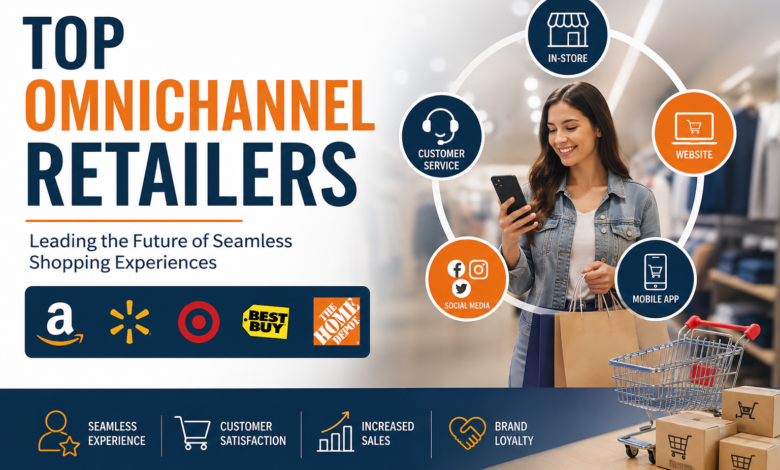
Top Omnichannel Retailers, Consumers no longer think in terms of “online” or “offline” shopping. They simply expect brands to meet them wherever they are—whether that’s browsing on a smartphone during lunch, checking store inventory from home, or picking up an order on the way home from work. This shift has transformed retail faster than almost any previous innovation. The companies leading this transformation are not just selling products; they’re creating seamless customer experiences across every touchpoint. Understanding the top omnichannel retailers reveals why some businesses continue to grow despite changing consumer habits and increasing competition.
What Are Omnichannel Retailers and Why Do They Matter?
Omnichannel retail refers to a business strategy that integrates physical stores, e-commerce websites, mobile apps, social commerce, customer service, and other sales channels into one connected customer experience. Unlike traditional multichannel retail, where each platform often operates independently, omnichannel ensures customers enjoy a consistent journey regardless of where they interact with a brand.
This strategy has become essential because modern consumers switch between devices and channels constantly. A shopper might discover a product on Instagram, research it on a laptop, compare prices through a mobile app, and complete the purchase in-store. Retailers that make these transitions effortless earn greater customer loyalty, higher conversion rates, and increased lifetime value.
Industry research consistently shows that omnichannel customers spend more than single-channel shoppers and tend to remain loyal for longer periods. Businesses that invest in unified customer data, personalised marketing, and flexible fulfilment options often outperform competitors that still treat digital and physical retail as separate operations. As technology advances, omnichannel retail continues evolving through artificial intelligence, predictive analytics, and automated logistics.
Characteristics Shared by the Top Omnichannel Retailers
The world’s leading retailers share several defining characteristics that distinguish them from competitors. First, they provide real-time inventory visibility across online and physical stores. Customers can instantly see product availability, reserve items, or choose convenient collection options without uncertainty.
Equally important is the integration of customer data. Every purchase, browsing session, loyalty reward, and support interaction contributes to a unified customer profile. This enables personalised product recommendations, customised promotions, and targeted marketing that feels relevant rather than intrusive.
Leading retailers also invest heavily in fulfilment flexibility. Services like Buy Online, Pick Up In Store (BOPIS), curbside collection, same-day delivery, and easy cross-channel returns have become standard expectations rather than premium features. Retailers that execute these services efficiently gain a significant competitive advantage.
Finally, technology acts as the backbone of every successful omnichannel strategy. Cloud platforms, AI-powered recommendation engines, RFID inventory tracking, digital payment systems, and customer relationship management software all work together to deliver seamless shopping experiences.
Top Omnichannel Retailers Leading the Global Market
Several retailers consistently rank among the industry’s strongest omnichannel innovators because they continuously invest in customer convenience, technology, and integrated commerce.
Amazon remains one of the most influential players by combining e-commerce leadership with physical retail through Amazon Fresh, Whole Foods Market, Amazon Go, and fast delivery services. Its Prime membership ecosystem creates a highly connected experience spanning entertainment, grocery shopping, cloud services, and retail purchases.
Walmart has dramatically transformed its digital capabilities while leveraging thousands of physical stores as fulfilment centres. Customers benefit from grocery pickup, same-day delivery, mobile scanning, pharmacy integration, and flexible returns. Walmart’s ability to merge online convenience with local store accessibility has strengthened its market position worldwide.
Target has successfully integrated mobile shopping, drive-up collection, same-day delivery, and store fulfilment into a highly efficient retail ecosystem. Investments in owned fulfilment capabilities have helped Target reduce delivery times while improving customer satisfaction.
Apple demonstrates omnichannel excellence by creating a seamless connection between its online store, physical retail locations, technical support, mobile ecosystem, and customer accounts. Customers experience consistent branding, personalised recommendations, and unified service regardless of where they engage with the company.
Nike transformed its retail strategy through direct-to-consumer investments, connected fitness apps, membership programmes, and digitally enhanced stores. Customers can reserve products online, receive personalised product suggestions, and access exclusive releases across multiple digital platforms.
Home Depot has become a leader in omnichannel home improvement retail by integrating professional contractors, DIY customers, inventory visibility, project planning tools, and flexible collection services into one connected experience.
Technology Driving Omnichannel Retail Success
Behind every successful omnichannel retailer lies an advanced technology ecosystem designed to connect customers, employees, suppliers, and inventory in real time. Artificial intelligence has become particularly important, helping retailers predict demand, personalise recommendations, optimise pricing, and automate customer support through intelligent chatbots.
Cloud computing enables retailers to synchronise inventory, customer information, and order management across thousands of locations simultaneously. This infrastructure allows businesses to respond quickly to changing customer demand while maintaining operational efficiency across multiple markets.
Data analytics has also become a competitive necessity. Retailers analyse purchasing behaviour, browsing history, seasonal demand, local preferences, and customer feedback to make smarter merchandising decisions. Predictive analytics helps forecast inventory needs, reducing both stock shortages and excess inventory while improving profitability.
Emerging technologies including computer vision, cashier-less checkout systems, augmented reality product visualisation, and AI-powered search are beginning to redefine customer expectations. Retailers investing early in these innovations are positioning themselves for long-term growth.
How Customer Expectations Are Reshaping Retail
Consumer behaviour has changed dramatically over the past decade, driven largely by smartphones, faster internet connections, and social commerce. Today’s shoppers expect immediate access to information, transparent pricing, personalised recommendations, and convenient delivery options.
Customers increasingly value convenience over brand loyalty alone. If one retailer cannot offer flexible shipping, accurate stock information, or frictionless returns, many consumers simply move to a competitor. This has encouraged retailers to prioritise experience alongside pricing and product selection.
Personalisation has become another defining expectation. Modern shoppers appreciate product recommendations based on previous purchases, location, browsing history, and lifestyle preferences. Artificial intelligence enables retailers to deliver highly relevant suggestions without overwhelming customers with irrelevant advertising.
Trust also plays an increasingly important role. Secure payment systems, transparent return policies, accurate delivery estimates, and responsive customer support significantly influence purchasing decisions. Successful omnichannel retailers understand that convenience and trust work together to build lasting customer relationships.
Business Benefits of an Effective Omnichannel Strategy
For retailers, omnichannel investment extends far beyond improving customer experience. Businesses implementing integrated retail strategies often report stronger revenue growth, increased customer retention, and higher average order values.
Customers engaging through multiple channels generally spend more over time because they interact with brands more frequently. Loyalty programmes become more effective when rewards apply seamlessly across online and offline purchases, encouraging repeat business and long-term engagement.
Operational efficiency also improves. Unified inventory systems reduce overstocking, minimise stockouts, optimise fulfilment decisions, and enable stores to function as local distribution centres. This flexibility reduces logistics costs while speeding up delivery times.
Marketing effectiveness increases as well. Unified customer profiles enable highly targeted campaigns, reducing wasted advertising spend while improving conversion rates. Retailers gain clearer insights into customer journeys, allowing continual optimisation of promotions, pricing, and merchandising strategies.
Challenges Facing Modern Omnichannel Retailers
Despite its advantages, omnichannel retail presents considerable operational complexity. Integrating legacy technology systems with modern cloud platforms requires substantial investment, skilled personnel, and long-term planning. Many retailers struggle with outdated infrastructure that limits data sharing across channels.
Inventory accuracy remains another significant challenge. Customers expect online stock information to reflect real-time store availability. Even small discrepancies can damage customer trust, particularly when shoppers travel to collect unavailable products.
Cybersecurity concerns continue growing alongside digital expansion. Retailers collect enormous volumes of customer information, making them attractive targets for cybercriminals. Protecting payment data, personal information, and business systems requires ongoing investment in security technologies and employee training.
Workforce adaptation also demands attention. Store employees increasingly fulfil online orders, manage digital inventory, assist customers using mobile technology, and handle multiple fulfilment methods simultaneously. Successful retailers invest heavily in employee training alongside technological upgrades.
Emerging Trends Defining the Future of Omnichannel Retail
Artificial intelligence will continue transforming retail over the coming years. AI assistants capable of understanding customer preferences, predicting purchases, and offering highly personalised shopping experiences are rapidly becoming mainstream. Generative AI may further enhance product discovery through conversational shopping experiences.
Social commerce continues expanding as consumers increasingly purchase products directly through platforms such as TikTok, Instagram, and YouTube. Retailers integrating these channels into broader omnichannel ecosystems will reach younger audiences more effectively.
Sustainability is becoming another competitive differentiator. Consumers increasingly favour retailers offering environmentally responsible packaging, carbon-conscious delivery options, ethical sourcing, and transparent supply chains. Omnichannel technology can support these initiatives through smarter logistics and inventory optimisation.
Automation within warehouses, robotic fulfilment centres, drone deliveries, autonomous vehicles, and predictive logistics will likely improve delivery speed while reducing operational costs. Retailers embracing these technologies early may gain significant long-term advantages.
Practical Lessons Businesses Can Learn from the Top Omnichannel Retailers
Businesses of every size can apply principles used by industry leaders without matching their budgets. The first priority should be creating consistent customer experiences across every sales channel. Branding, pricing, product information, and customer support should remain unified whether customers shop online or in-store.
Investing in customer data integration provides another high-impact opportunity. Understanding customer behaviour across channels enables better marketing decisions, stronger personalisation, and improved customer service. Even small businesses benefit from integrated CRM systems and inventory management software.
Flexible fulfilment options should also receive attention. Local collection, easy returns, accurate inventory visibility, and multiple payment methods significantly improve customer satisfaction. Small operational improvements often produce measurable increases in repeat purchases and customer loyalty.
Finally, businesses should adopt continuous improvement rather than seeking instant perfection. Successful omnichannel strategies evolve gradually through customer feedback, performance analysis, technology upgrades, and changing consumer expectations.
Key Takeaways
The top omnichannel retailers succeed because they prioritise customer experience rather than individual sales channels. They integrate digital platforms, physical stores, inventory systems, and customer data into one connected ecosystem that feels effortless for shoppers.
Technology—including artificial intelligence, cloud computing, predictive analytics, and automation—serves as the foundation for this integration. Companies that invest strategically in these capabilities often experience stronger customer loyalty, increased spending, and improved operational efficiency.
Businesses of every size can adopt omnichannel principles by focusing on consistent branding, unified customer information, flexible fulfilment, accurate inventory management, and continuous innovation. As consumer expectations continue rising, omnichannel excellence will increasingly determine long-term retail success.
Frequently Asked Questions
What is an omnichannel retailer?
An omnichannel retailer integrates online stores, physical shops, mobile apps, customer service, and other sales channels into one seamless shopping experience where customer information and interactions remain connected across every touchpoint.
How is omnichannel different from multichannel?
Multichannel retail uses several sales channels independently, whereas omnichannel connects those channels into a unified customer journey with consistent inventory, customer data, pricing, and service.
Why are omnichannel retailers more successful?
They typically deliver better customer experiences through convenience, personalisation, flexible fulfilment, and consistent service, leading to higher customer satisfaction, increased loyalty, and stronger long-term revenue growth.
Which industries benefit most from omnichannel retail?
Fashion, grocery, electronics, home improvement, beauty, sporting goods, healthcare, and luxury retail all benefit significantly because customers increasingly research and purchase products across multiple digital and physical channels.
What technologies support omnichannel retail?
Key technologies include artificial intelligence, cloud computing, CRM platforms, inventory management systems, mobile applications, predictive analytics, RFID tracking, digital payment systems, and automated fulfilment technologies.
Can small businesses implement omnichannel strategies?
Yes. Small businesses can start by integrating their website, social media, inventory management, customer database, and physical store while offering services like local pickup, online ordering, and unified customer support.
What is the future of omnichannel retail?
The future will likely feature greater AI personalisation, conversational commerce, automation, social shopping integration, sustainable fulfilment, immersive augmented reality experiences, and increasingly intelligent supply chains that anticipate customer demand before purchases occur.
Conclusion
The rise of the top omnichannel retailers demonstrates that modern retail success depends less on having the biggest stores or the largest websites and more on delivering connected, frictionless experiences wherever customers choose to shop. Industry leaders continue investing in artificial intelligence, data integration, fulfilment flexibility, and customer-centric innovation because they recognise that convenience has become a defining competitive advantage.
For businesses planning their next stage of growth, the lesson is clear: build every customer interaction around simplicity, consistency, and trust. Whether you’re a global retailer or a growing local business, embracing omnichannel principles today will better prepare you for tomorrow’s increasingly connected retail landscape. Continue exploring emerging retail technologies, monitor evolving consumer behaviour, and refine your customer experience continuously to stay competitive in the digital-first economy.
You May Also Read: Best Buy Marketing Plan